


トピックス
The “Shoe Care & Leather Care” Situation Among Young People in France: フランスの若者における“シューケア&レザーケア”の現状
まえがき
約1ヶ月の予定で当社にインターン留学をしていたフランス人学生 Jules Vallez(ジュール・バレ)さんに、フランスの若い人たちの“シューケア&レザーケア”の実情について伺いました。
日本で現在のような革靴・革製品のお手入れが普及し始めたのは、西洋靴を身につけるようになった明治初期以降からと言われており、約150年くらい前の話です。
開国を機に洋服が着られるようになったことで当時の主流の履物の足袋に代わって靴が履かれるようになると同時にお手入れの必要性が生じたわけです。
ヨーロッパでは中世の時代(500~1500年前)にはすでに革靴・革製品は手入れをしながら使われていましたが、では現代のヨーロッパの若者は “シューケアやレザーケアの文化”をどのように捉えているのか、生の声を聞いてみましょう。
The "Shoe Care & Leather Care" Situation Among Young People in France:
フランスの若者における“シューケア&レザーケア”の現状
While in France, our grandparents’ generation had deep roots inside the shoes and leather care, the young generation has seen a great decline in this matter. Our grandparents were very serious about maintaining their goods, in order to keep them constantly intact. For them, taking care of their things was a matter of discipline and economics. They would polish their shoes once a week as a routine and brush them after every wear, because it was simply normal to do so at the time.
フランスでは、祖父母世代が靴や革製品のケアに深く根ざした文化を持っていた一方で、若い世代においてはこの分野が大きく衰退してきました。祖父母たちは、自分の持ち物を常に良好な状態に保つことに非常に真剣に取り組んでいました。彼らにとって、物を大切に手入れすることは、規律であり、経済的な考え方でもあったのです。週に一度は靴を磨き、履くたびにブラッシングをする――それが当時はごく当たり前の習慣でした。
Our parents’ generation, however, lived through the rise of the fast fashion trends. It somehow shifted for some people in this generation from deeply caring about their belongings, to buying and throwing away their clothes most of the time. As a result, the domestic habit of applying creams, waxes and edge dressings to shoes at home saw a significant decline. Of course this would not be accurate for everyone; I am just generalizing here. For instance, my father always cared a lot about his clothes, buying high-quality materials from reliable, well-known brands, sometimes even French ones. I inherited some of his shirts from “Façonnable”, as well as some of his t-shirts, all in perfect conditions despite being over 30 years old.
しかし私たちの親世代は、ファストファッションの台頭を経験しました。その結果、この世代の一部では、持ち物を丁寧にケアするという姿勢から、服を買っては捨てるという消費行動へとシフトしていきました。家庭で靴にクリームやワックス、コバ仕上げ剤を塗るといった習慣も、著しく減少しました。もちろん、これはすべての人に当てはまるわけではなく、あくまで一般論です。例えば私の父は、いつも服をとても大切にしており、信頼できる有名ブランドの高品質な素材を選んでいました。ときにはフランスブランドのものもありました。私は「Façonnable (ファッソナブル)」 のシャツやTシャツを父から譲り受けていますが、どれも30年以上前のものとは思えないほど、完璧な状態を保っています。
Regarding Gen-Z and Millennials, there is undoubtedly a considerable decrease in how much they care for their goods compared to our grandparents, but nonetheless, we are seeing a rise compared to just a few decades ago. People have become much more environmentally and eco-conscious about what they buy over the years, often preferring sometimes better-quality clothes that can be repaired instead of thrown away. From my perspective, which would be align closely to many people around me in my generation, I am constantly buying secondhand clothes in local thrift shops or on well-known reselling platforms, either European or Worldwide, such as “Grailed”, “Vinted”, or even “Vestiaire Collective”.
Z世代やミレニアル世代に目を向けると、祖父母世代と比べて持ち物へのケア意識が大きく低下しているのは確かです。しかし同時に、数十年前と比べれば、再び上昇傾向にあるとも言えます。人々は年々、購入する物に対して環境意識やエコ意識を強めており、捨てるよりも修理できる、より質の高い服を選ぶようになっています。私自身、そして私と同世代の多くの人に共通する感覚として、地元の古着屋や、ヨーロッパおよび世界的に知られたリセールプラットフォーム――例えば「Grailed 」「Vinted」、あるいは「Vestiaire Collective」など――で、常に中古の服を購入しています。
Doing so prevents the clothes from being wasted. “Le Relay”, a major French player in textile recycling, reported that over 700,000 items of clothing thrown away each year, warning that the system was on the verge of collapse. To counter this issue, the French government therefore pledged €49 million in aid to support the collection and sorting of textile waste and implemented as well the “Repair Bonus” (Bonus Réparation). This provides a significant discount for customers to mend their clothes and shoes while preserving the fading craft of local cobblers. The compensation ranges from 6€ (~1,100 yen) for mending a tear in a garment to 25€ (~4,600 yen) for resoling leather shoes.
こうした行動は、衣類の廃棄を防ぐことにつながります。フランスの繊維リサイクル大手「Le Relay」は、毎年70万点以上の衣類が廃棄されていると報告し、このままではシステムが崩壊寸前であると警鐘を鳴らしています。これに対抗するため、フランス政府は繊維廃棄物の回収・分別を支援するために4,900万ユーロの補助金を拠出し、さらに「修理ボーナス(Bonus Réparation)」制度を導入しました。この制度により、消費者は衣類や靴の修理に対して大幅な割引を受けることができ、同時に、地元の靴修理職人という衰退しつつある職人技の保護にもつながっています。補助額は、衣類の破れ修理で6ユーロ(約1,100円)から、革靴のオールソール交換で25ユーロ(約4,600円)まで幅があります。
Consequently, This has created a new hype around local cobblers shops amoung the youth with over 83% of the 826,000 repairs funded through this initiative being made by cobblers. For a deeper understanding of the cobblers’ situation in France: in 1950, over 50,000 cobblers were established in France; nowadays that number has decreased to 3,500. In my opinion, implementing such a countermeasure is a excellent idea in itself, but the process still needs to be simplified or made easier to execute. From what I have found, people currently need to apply individually for each repair. Pictures are requested and it is the cobblers’ role to continue and finalize the refunding of this programme. The issue is that these shops are mostly run by older artisans who are often digitally inexperienced, making it difficult for them to execute the online process. Hopefully, there will continue to be young people driven by pure passion who are willing to take over these traditional workshops.
その結果、この取り組みによって支援された82万6,000件の修理のうち、83%以上が靴修理店によるものであり、若者の間で地元の靴修理店への新たなブームが生まれています。フランスにおける靴修理職人の状況をより深く理解するために数字を挙げると、1950年にはフランス国内に5万軒以上の靴修理店がありましたが、現在ではその数は3,500軒にまで減少しています。私個人の意見として、このような対策を導入すること自体は非常に優れたアイデアだと思いますが、制度の仕組みはまだ簡素化されるか、より実行しやすくなる必要があります。現状では、修理ごとに個別申請が必要で、写真の提出も求められ、払い戻し手続きの継続・完了は靴修理店側の役割となっています。しかし問題なのは、これらの店舗の多くが高齢の職人によって運営されており、デジタルに不慣れなケースが多いため、オンライン手続きの実行が難しいという点です。願わくば、純粋な情熱を原動力に、こうした伝統的な工房を引き継ごうとする若者が今後も現れてほしいと思います。
What Do Leather Shoes and Leather Goods Mean to Young People in Europe:
ヨーロッパの若者にとって、革靴や革製品とは何か
In Europe, leather good is starting to become more of a standalone fashion statement. While young consumers have become more selective about buying brand-new items due to inflation, small leather accessories, heritage apparel, and leather pieces have therefore seen highly sustained momentum in the secondhand market. Following what I would call the popular “Scandinavian Style”, items like leather loafers, boots, derby, jacket and bags, have become central to this way of dressing. To further understand what I am talking about, here are a few pictures that perfectly capture this style:
ヨーロッパでは現在、革製品が単なる実用品ではなく、ひとつの独立したファッションステートメントとして捉えられるようになっています。インフレの影響で新品購入に慎重になる若い消費者が増える中、小さな革小物、ヘリテージ系のアパレル、そして革製アイテムは、中古市場で非常に安定した人気を保っています。私が「スカンジナビアン・スタイル」と呼ぶ流れに沿って、レザーローファー、ブーツ、ダービーシューズ、ジャケット、バッグといったアイテムが、この着こなしの中心的存在になっています。私の言っていることをより理解してもらうために、このスタイルを完璧に表している写真をいくつか挙げたいと思います。



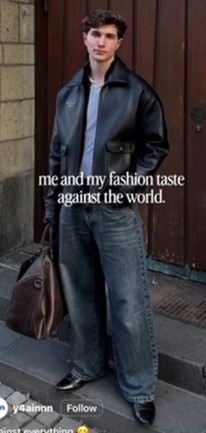
As you can notice, a lot of leather goods are utilized in this style, which has significantly revived the trend and hype surrounding them, including myself. A significant number of young Europeans genuinely enjoy hunting for leather clothing in thrift shops or on reselling apps, which have completely normalized the purchase of premium goods for the younger generation. In fact, the secondhand luxury market in Europe has reached massive proportions over the past few years, with France now holding the leading country market at 28.4%.
ご覧のとおり、このスタイルでは多くの革製品が用いられており、それが革製品をめぐるトレンドや熱狂を大きく復活させています。私自身もその一人です。多くのヨーロッパの若者が、古着屋やリセールアプリで革製の衣類を探すことを純粋に楽しんでおり、これによって若い世代にとって高級品の購入が完全に日常化しました。実際、ヨーロッパにおける中古ラグジュアリー市場はここ数年で巨大な規模に成長しており、現在ではフランスが28.4%のシェアを持つ最大の市場となっています。
Ultimately, I have to say that the biggest “flex” and the most meaningful way of getting a leather jacket, shoes, or even bag, is to receive it from its own family, such as your dad, uncle, or grandpa. It is truly the best treasure, one you could never find in a local thrift shop, because it has an irreplaceable sentimental value attached to it. Those who have the honor of inheriting these pieces can embody the legacy of the clothing the moment they wear it, connecting with the multiple memories attached to it, and the journeys it has been through spanning all these generations.
最終的に私が言いたいのは、革のジャケットや靴、あるいはバッグを手に入れるうえで、最も誇らしく、そして最も意味のある方法は、父親や叔父、祖父といった家族から受け継ぐことだという点です。それは、地元の古着屋では決して見つけることのできない、本当の宝物です。なぜなら、そこには代えがたい感情的価値が宿っているからです。こうした品を受け継ぐ栄誉に恵まれた人は、それを身に着けた瞬間から、その服が持つレガシーを体現し、そこに刻まれた数々の記憶や、世代を超えて歩んできた旅路とつながることができます。
European TikTok and Instagram have somewhat built a trend centered around “archival fashion” and “thrifting my grandparent’s closet”. We know that older leather goods are most of the times made by traditional European factories, decades ago, meaning they often feature superior, full-grain leather and craftmanship compared to modern mass-produced equivalents found nowadays on the market. I, inherited of a large leather jacket from my father a few months ago, and I am proud to say that I used to wear it every single day. I could cite many goods, mainly leather ones, that my brother and I inherited from our father, which he sometimes originally inherited from his own parents. I think what we, as Europeans, truly love about these goods is the natural weathering (patina) they develop by being worn for so long. It gives them unique characteristics that can never be witnessed on brand-new jackets. Beyond the emotional connection, it would also happen to be the most cost-effective and sustainable way to collect beautiful clothes.
ヨーロッパのTikTokやInstagramでは、「アーカイブ・ファッション」や「祖父母のクローゼットを漁る」といったテーマを中心としたトレンドも生まれています。古い革製品は、数十年前にヨーロッパの伝統的な工場で作られていることが多く、現代の大量生産品と比べて、より上質なフルグレインレザーや高度な職人技が用いられているケースがほとんどです。私は数か月前に父から大きなレザージャケットを受け継ぎましたが、毎日のようにそれを着られることを誇りに思っています。私と兄は、父から受け継いだ多くの品々、特に革製品を持っていますが、それらの中には、父自身がさらにその親から受け継いだものもあります。私たちヨーロッパの人間がこれらの品に本当に惹かれる理由は、長年使い込まれることで生まれる自然なエイジング(風合いの変化、パティーナ)にあると思います。それは新品のジャケットでは決して見ることのできない、唯一無二の個性を与えてくれます。感情的なつながりに加え、こうした受け継ぎは、美しい服を集めるうえで、最もコスト効率がよく、かつ持続可能な方法でもあるのです。
Sources:(出展)
Gould, K. (2026, 31 mars). How France’s anti-waste laws are boosting small repair shops - Textile Exchange.
https://textileexchange.org/how-frances-anti-waste-laws-are-boosting-small-repair-shops/
Europe Secondhand Luxury Goods. (2026, mars). Imarcgroup.
https://www.imarcgroup.com/europe-secondhand-luxury-goods-market
The rising importance of second-hand fashion for Gen Z. (s. d.). EU Textiles Ecosystem Platform.
https://transition-pathways.europa.eu/textiles/articles/rising-importance-second-hand-fashion-gen-z
いかがでしたでしょうか
フランスの若者たちの変化に触れることで見えてくるのは、「失われかけたケアの文化は、形を変えて再び息を吹き返している」という事実です。
古着、修理、継承――それぞれの選択のなかに、“長く使うこと”への新しい価値観が確かに根付き始めています。
一方で日本に目を向けると、元々持ち合わせていたはずの「物を大切にし、手入れをして使い続ける文化」は、便利さや消費のスピードの中で、どこか遠い存在になりつつあるのかもしれません。
しかし今、世界ではあらためて“手をかける豊かさ”が見直されています。
靴を磨く、革を育てる、修理をする――そうした小さな行為の積み重ねが、モノとの関係を深め、自分自身のスタイルや価値観を形づくっていく。
フランスの事例は、単なる海外トレンドではなく、私たち自身の足元を見つめ直すきっかけでもあります。
日々手にする一足に、どこまで向き合えているか――その問いかけこそが、これからの時代の豊かさを考えるヒントになるのではないでしょうか。

更新情報・お得な情報をメールでお届け!
“ShoesLifeメルマガ”登録受付中♪
関連記事
No related posts.